This is the February issue, a time to reflect, look ahead, and stay curious.
We cover software vs. semiconductors (can software survive AI), and ways to spot tax scams. We also launch our annual Predict the Future game and share a look at Sabrina’s plans for 2026—whether serious, ambitious, or delivered with her signature humor, they are sure to spark conversation. Upcoming events round out a busy and exciting month.
This month, we honor Black History Month and the remarkable contributions, innovation, and leadership that continue to shape our communities and inspire progress today. There is much to explore as we move forward into the year.
February 2026
Capital Markets
Software vs. Semiconductors: Can Software Survive AI?
Additional content provided by Tucker Beale, Analyst, Research
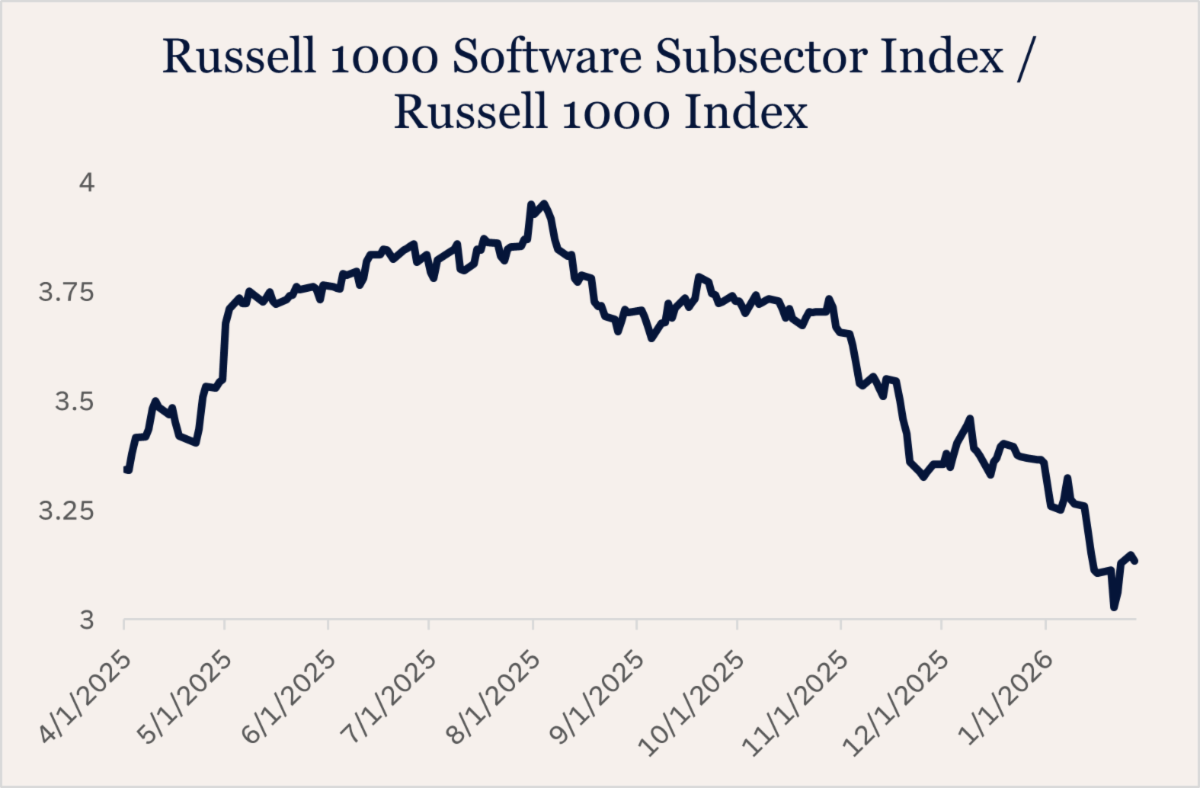
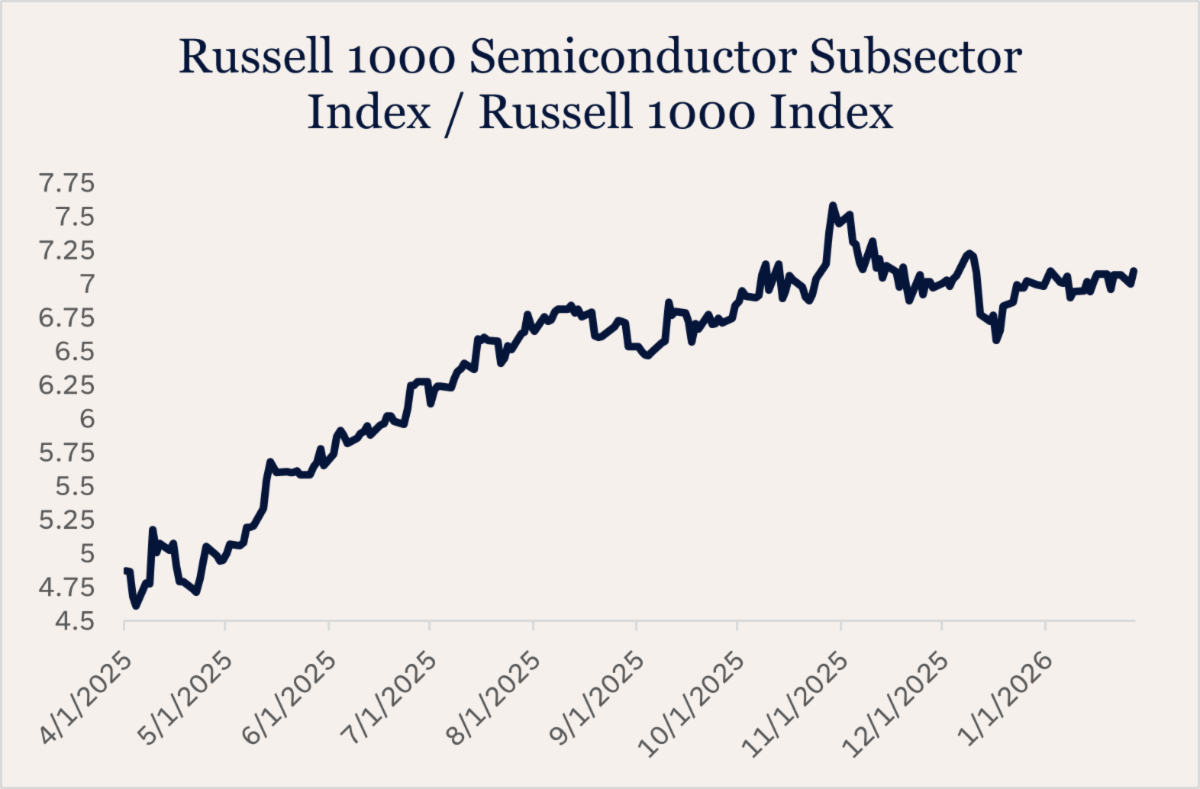
As AI tools continue to improve, concerns have grown that software as a service (SaaS) customers will be less interested in legacy offerings and instead leverage newfound AI capabilities in their place. Why do I need to pay for software, the thinking goes, if internal development of these systems now takes developers less time with AI? Furthermore, with the release of offerings like Anthropic’s Claude Cowork, an application with access to read and edit files, less technical users are now empowered to replace existing workflows. These concerns have worsened recently, and AI enthusiasm has spurred semiconductor stocks higher, crowding out investments in software names. The result has been a large performance dispersion within the technology sector between the software and semiconductor industries.
Software vs. Semiconductors
Source: LPL Research, Bloomberg 01/27/2026
Disclosures: Past performance is no guarantee of future results. Indexes are unmanaged and cannot be invested in directly.
Source: LPL Research, Bloomberg 01/27/2026
Disclosures: Past performance is no guarantee of future results. Indexes are unmanaged and cannot be invested in directly.
As a result of the dispersion in price action, the software subsector is now trading at a discount relative to the semiconductor subsector. The Russell 1000 semiconductor subsectors index is trading at 43.6x forward earnings, while the Russell 1000 software subsector index is trading at 32.4x forward earnings. Semiconductors are essential for AI and for all the technology we interact with daily, but their manufacturing is a cyclical business.
Historically, demand for chips has spurred increased production capacity that ultimately leads to overproduction and falling prices before the cycle repeats. While AI has likely created a super cycle, ultimately this cyclicality is not something we would expect to change in the future, and therefore their valuations eclipsing software feels like a bit of a dislocation. For context, the software business has been one of the best businesses historically. It is inherently scalable, as once software has been developed, there is a very low incremental cost each time it is sold, and the business is largely based on subscriptions that are predictable and therefore easy to model. Traditionally, these types of businesses would command a premium valuation and could again in the future if they are not completely displaced by AI.
Mass cancellations of enterprise software contracts in the short to medium term seem unlikely. In a recent webinar with analysts and IT executives, JPMorgan discussed how it is not abandoning enterprise software because of AI. AI tools are being used, but adoption is practical and gradual as opposed to outright disruptive. For large firms, a more realistic goal is to leverage AI tools to make existing users more productive, not to replace systems. The dream of giving agentic tools read and write access to the files used to run large enterprises seems far away and fraught with risks and data privacy concerns. This should help to put some floor under the beaten-up software names.
That said, software companies that are not a system of record do have some risk of displacement as they may be more of a “nice to have” or feature enhancer in the future. Most, if not all, software producers, will need to offer their own AI enhancements to maintain their market share going forward. Further down the road, a slowdown in user counts is a risk if generalized AI tools put a lid on knowledge worker employment growth.
Technically, it is hard to argue with the longer-term relative strength of semis. However, we see the potential for software to rebound relative to semis in the first quarter. The software‑to‑semis ratio is deeply oversold and approaching a key support level. The magnitude of the current drawdown is similar to past points where the trend has reversed, and the pair now trades at its widest discount to the 40‑week moving average since 2021. In short, while we acknowledge the established leadership of semis, the technical setup suggests software may be nearing an important inflection point in relative performance.
The Strategic and Tactical Asset Allocation Committee (STAAC) maintains a neutral weight recommendation on the technology sector. The sector boasts a positive relative trend and has been on the shopping list as an opportunity for a potential upgrade. The sector is experiencing very strong earnings growth alongside strong margins, which help to justify high sector level valuations, and a snapback in software names (which make up around a third of the sector) could be a catalyst for an upside surprise.
Did You Know?
Beware of Schemes During Tax Season
It’s tax season! Every year, around this time, the Internal Revenue Service (IRS) publishes its dirty dozen – a list of scams criminals use to try and ferret out personal information and/or steal money.1 For example, if you received an email from a top executive in your company or organization requesting data from IRS form W2 for the previous tax year, what would you do?2
The right answer is: Don’t respond.
Disguising an email to look like it’s from your boss or someone higher up in your firm is called spoofing. Criminals have been spoofing corporate employees for years, and now they’re turning their attention to school districts, tribal organizations, restaurants, hospitals, and non-profits, according to an IRS press release.3 If you receive a suspicious email, contact your Human Resources department.
Spoofing is just one scheme among many. Here are some of the other scams you should guard against:
Phishing.Merriam-Webster explains phishing like this, “…A common phishing scam involves sending emails that appear to come from banks requesting recipients to verify their accounts by typing personal details, such as credit card information, into a Web site that has been disguised to look like the real thing. Such scams can be thought of as ‘fishing’ for naive recipients.”4
If you receive an email purporting to be from the IRS, remember this: The IRS does not contact taxpayers about refunds or tax bills using email, text, or social media. In fact, the agency cautions Americans not to click on a link in an email claiming to be from the IRS.1
In addition, banks and financial institutions typically won’t ask for confidential personal information (usernames, passwords, personal identification numbers, and so on) through text message, email, or social media. One bank provided examples of fake emails that had been sent to its customers, including this one:5
Dear account holder,
Due to concerns for the safety and integrity of your online account, we have issued this warning message. It has come to our attention that your account information needs to be updated due to inactive members, frauds, and spoof reports.
We ask you to visit the following link to start the procedure of confirmation on customer data.
To get started, please click HERE.
Please don't reply directly to this automatically generated email message.
Instead of clicking on a link in a suspicious email or text, call your local bank branch or IRS office to ask whether they sent the request.
Phone scams. These IRS phone scams seem to be increasing each year and getting more and more savvy. Be wary if you receive a call and the person says they are from the IRS – even if caller ID says it’s the IRS and the person on the other end of the line offers a badge number and official sounding title – because it’s likely a scammer.6
Criminals have been impersonating IRS agents and demanding immediate payment of taxes without giving the taxpayer an opportunity to question or appeal the amount owed. They may threaten the taxpayer with arrest, deportation, or another punishment. The IRS does not do this. Scammers may also require a specific payment method, such as a prepaid debit card, or insist taxpayers provide credit or debit card numbers over the phone. Don’t do it.6
Instead of engaging, take the caller’s information, refrain from giving out any of your information, and tell them you will call back. Then, look up the number for your local IRS office. Call them to confirm if the caller is an actual IRS employee or not. Don’t call the number provided by the caller.6
Identity theft. Criminals have been using other people’s personal information (Social Security numbers, names, addresses, birth dates, etc.) to obtain money or credit for many years. Recently, scammers have also been filing false tax returns. The IRS has implemented measures that appear to be effective.1
According to Consumer Affairs, cyber-attacks are getting more ambitious and diversifying their targets.7 Additionally, internet attacks, especially those targeting routers and cameras continues to increase.7 Those who have been subject to identity theft in the past are also most likely to be subject to future attacks. While everyone in the U.S. with a Social Security number is at risk of identity theft, children and retirees are the most common targets.
Regardless of the progress that has been made, the IRS cautioned, “Taxpayers need to watch out for identity theft especially around tax time. The IRS continues to aggressively pursue the criminals that file fraudulent returns using someone else’s Social Security number. Though the agency is making progress on this front, taxpayers still need to be extremely cautious and do everything they can to avoid being victimized.”1
If you discover someone has filed a tax return using your personal data, Intuit.com advises you complete IRS Form 14039 and mail it to the IRS.8
Being wary can help protect against scammers, but criminals may find a way to capture your personal information regardless of any precautions you take. If you worry your data may have been comprised, the Federal Trade Commission suggests considering a credit freeze, which lets you restrict access to your credit report and makes it more difficult for identity thieves to open new accounts in your name. You’ll still be able to open new accounts or allow credit checks by prospective employers or landlords, but you’ll need to specifically unfreeze your account for that purpose. To learn more, contact one of the credit bureaus: Experian, Equifax, or TransUnion.9
Hanging out with us in the Plum Tree!
Announcing Our 2025 Predict the Futures Winners — And Kicking Off the 2026 Game!
The results are in for our 2025 Predict the Future's game. Thank you to all who participated and shared their insightful predictions for 2025. Winners were determined by whose guesses were closest to the real results in each category — high or low.
Congratulations to all! Your forecasting skills earned you bragging rights for the year — and of course, your prizes.
ACTUAL ON 12/31/25
CLOSEST GUESS
DIFFERENCE
WINNER
Dow Jones Industrial Average
48,063.29
48,000
63.29
Alex H.
S&P 500
6,485.10
6,500
14.90
Alex H.
Gold
$4,339.65 per oz
$4,600 per oz
$260.35 per oz
Jacquelyn R.
10-Year Treasury
4.18%
4.25%
.07%
Bill S.
Join the fun!
Whether it is the bragging rights, the prizes, or simply the thrill of a spot‑on prediction, we are excited to see what you think 2026 will bring. Put your forecasting skills to the test and share your best guesses. Click on the link below to learn more and enter.
The game will conclude at a special Open House event. A new space. A final reveal. More details to come.
2026 Plans, Goals, and a Little Humor—Sabrina's turn!
The Plums are ready to share their plans, goals, thoughts, and aspirations for 2026—sometimes serious, sometimes funny. It is Sabrina's turn this month! Be sure to tune in next month for the next Plum spotlight.
Upcoming Events
Save the Date
February 10, 2026 | 12pm EST
Student of the Market - Presented by BlackRock
The Markets: Where have they been? Where are they now? Where do we think they are going?
Please join us for another informative webinar with returning guest speaker, Mark Peterson, the author of the popular “Student of the Market” monthly publication that is distributed widely to advisors across the country.
In today’s global financial markets and nonstop news cycle, it can be hard to cut through the noise and identify the trends that matter most.
Join us for a comprehensive review of the investment landscape across key markets and asset classes that leverages the insight of dozens of asset managers and investment research firms.
Young Investors Series: Invest Now! Or Pay Later...
Join Greg Bernhard and Brock Mumford (members of PlumTree Financial’s investment team) for an engaging session designed specifically for young investors ready to take control of their financial journey.
This webinar will guide you through the essentials of creating a financial plan, including setting meaningful goals, building a budget, starting to invest, and planning for retirement.
This February, fall in love with smarter money moves. 💖Follow us.
Dead as a doornail - The phrase dates back to at least the 14th century. The explanation is believed to be tied to large iron nails hammered flat in wooden doors that could not be reused once bent over, so they were considered "dead". The old, vivid idiom meaning completely and unquestionably dead—or, in financial/business use, totally worthless or beyond recovery.
Disclosures
Software vs. Semiconductors: Can Software Survive AI?
This material is for general information only and is not intended to provide specific advice or recommendations for any individual. There is no assurance that the views or strategies discussed are suitable for all investors. To determine which investment(s) may be appropriate for you, please consult your financial professional prior to investing.
Investing involves risks including possible loss of principal. No investment strategy or risk management technique can guarantee return or eliminate risk.
Indexes are unmanaged and cannot be invested into directly. Index performance is not indicative of the performance of any investment and does not reflect fees, expenses, or sales charges. All performance referenced is historical and is no guarantee of future results.
This material was prepared by LPL Financial, LLC. All information is believed to be from reliable sources; however, LPL Financial makes no representation as to its completeness or accuracy.
Unless otherwise stated LPL Financial and the third-party persons and firms mentioned are not affiliates of each other and make no representation with respect to each other. Any company names noted herein are for educational purposes only and not an indication of trading intent or a solicitation of their products or services.
Asset Class Disclosures –
International investing involves special risks such as currency fluctuation and political instability and may not be suitable for all investors. These risks are often heightened for investments in emerging markets.
Bonds are subject to market and interest rate risk if sold prior to maturity.
Municipal bonds are subject and market and interest rate risk and potentially capital gains tax if sold prior to maturity. Interest income may be subject to the alternative minimum tax. Municipal bonds are federally tax-free but other state and local taxes may apply.
Preferred stock dividends are paid at the discretion of the issuing company. Preferred stocks are subject to interest rate and credit risk. They may be subject to a call features.
Alternative investments may not be suitable for all investors and involve special risks such as leveraging the investment, potential adverse market forces, regulatory changes and potentially illiquidity. The strategies employed in the management of alternative investments may accelerate the velocity of potential losses.
Mortgage-backed securities are subject to credit, default, prepayment, extension, market and interest rate risk.
High yield/junk bonds (grade BB or below) are below investment grade securities, and are subject to higher interest rate, credit, and liquidity risks than those graded BBB and above. They generally should be part of a diversified portfolio for sophisticated investors.
Precious metal investing involves greater fluctuation and potential for losses.
The fast price swings of commodities will result in significant volatility in an investor's holdings.
This research material has been prepared by LPL Financial LLC.
Not Insured by FDIC/NCUA or Any Other Government Agency | Not Bank/Credit Union Deposits or Obligations | Not Bank/Credit Union Guaranteed | May Lose Value
Securities offered through LPL Financial, a Registered Investment Advisor, Member FINRA/SIPC.
This material was prepared by Carson Coaching. Carson Coaching is not affiliated with the named broker/dealer or firm.
Securities and Advisory services offered through LPL Financial, a Registered Investment Advisor, Member FINRA/SIPC. Insurance products offered through LPL Financial or its licensed affiliates.